Root Cause of Symptoms: Why Quick Fixes May Not Be Enough
When you’re trying to understand the root cause of symptoms, it’s worth looking beyond the symptom itself. If you’ve tried different treatments but still don’t feel better, you may be wondering why the same problem keeps coming back.
Think about someone who keeps getting headaches. They take a pain reliever, feel better, and go about their day. A few days later, the headache returns.
The medication may be helping with the pain, but the reason for the recurring headaches may still need attention.
This doesn’t mean symptom relief is wrong. It matters. But when symptoms keep returning, it may be time to ask whether something else needs to be evaluated.
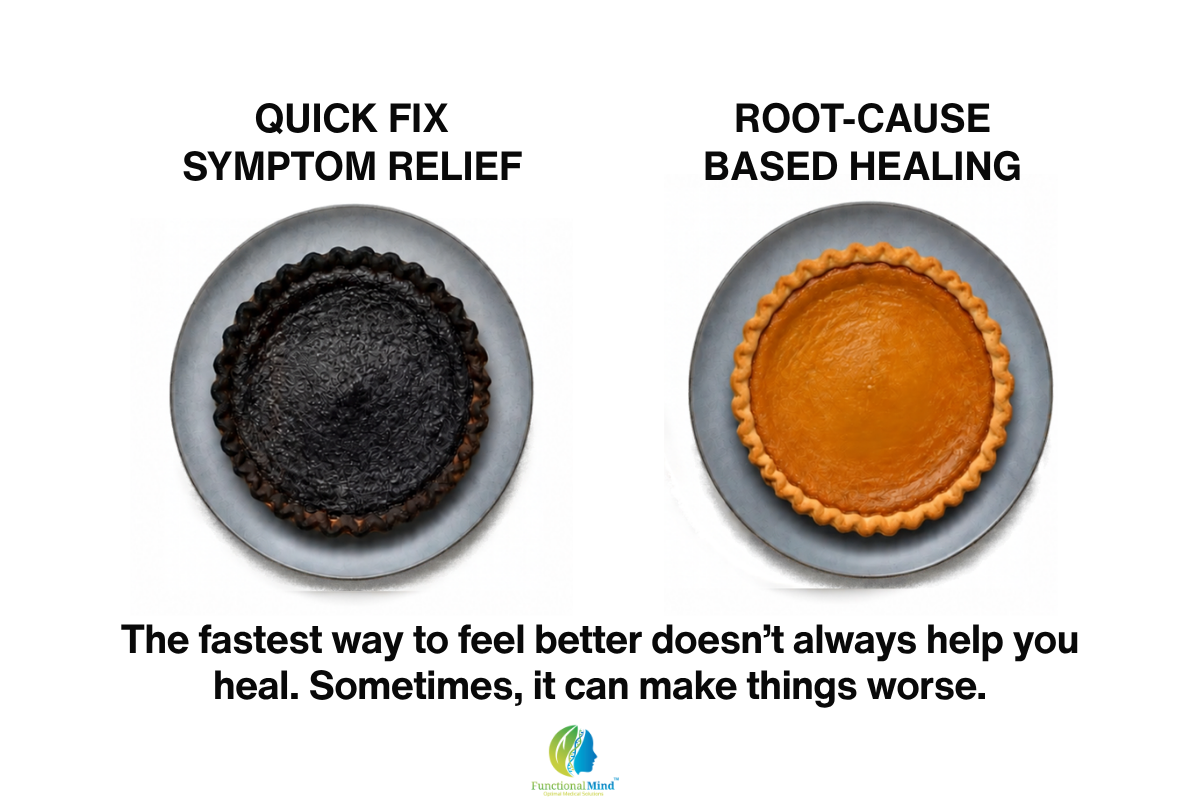
What’s the Difference Between Symptom Relief and Root-Cause-Based Healing?
There’s a difference between managing a symptom and investigating what may be contributing to it.
A pain reliever can help with a headache. Depending on the situation, a healthcare provider may also need to consider other possible explanations, such as sleep problems, dehydration, vision issues, or another medical condition.
The appropriate evaluation depends on the person’s symptoms and health history.
The same principle applies to other health concerns. Treating a symptom can be an important part of care, but it doesn’t always answer every question about why the symptom is happening.
Quick relief and understanding the root cause of symptoms aren’t the same thing. Both may have a place in a person’s treatment plan.
Why Do Symptoms Keep Coming Back?
There isn’t one answer for everyone. Recurring symptoms can have different explanations, and sometimes more than one factor is involved.
Here are a few areas that may be worth discussing with your healthcare provider.
1. Sleep and Stress
How well are you sleeping? Are you dealing with ongoing stress?
Sleep difficulties and stress can affect how you feel, both physically and emotionally. If you’re experiencing fatigue, difficulty concentrating, or changes in mood, these are useful details to discuss during a medical assessment.
They don’t automatically explain your symptoms, but they may be relevant to your health history.
2. Nutrition and Digestive Health
Your eating habits, nutritional intake, and digestive symptoms can provide useful information about your health.
Depending on what you’re experiencing, your healthcare provider may consider whether your diet, a possible nutrient deficiency, or a digestive condition needs further evaluation. It’s important to assess these possibilities rather than assume that a particular food or nutrient is responsible.
3. Hormones and Other Medical Conditions
Hormonal changes and certain medical conditions can contribute to symptoms such as fatigue or changes in mood. However, these symptoms can have many explanations.
If you’re experiencing ongoing symptoms, an appropriate medical evaluation can help determine which factors, if any, need further investigation.
How Functional Medicine Looks at the Root Cause of Symptoms
At Functional Mind, we take a functional medicine approach to mental and physical health.
Rather than looking at a symptom in isolation, we consider the person’s health history and other factors that may be relevant to their concerns. Depending on the individual, this may include nutrition, sleep, stress, lifestyle, and other aspects of health.
For someone experiencing depression, anxiety, or persistent fatigue, this can include considering whether physical health concerns may also need attention.
That doesn’t mean depression or anxiety always has a physical cause. Mental health conditions are complex, and appropriate mental health care remains important.
Medication and other treatments can play an important role in managing symptoms and supporting recovery. Investigating potential contributing factors doesn’t mean stopping a treatment that’s helping. Any changes to prescribed medication should be discussed with the prescribing healthcare professional.
The aim is to understand the person’s health concerns as thoroughly as possible and use that information to guide appropriate care.
What Can You Do If Your Symptoms Keep Returning?
If you’re still dealing with the same symptoms after trying different treatments, start by discussing what’s happening with your healthcare provider.
It may help to keep track of:
- When your symptoms started and how often they occur.
- What makes them better or worse.
- Changes in your sleep, energy, digestion, or mood.
- Any changes you’ve noticed since starting a medication or treatment.
- Questions or concerns you want to discuss at your next appointment.
These details can help your healthcare provider understand your experience and decide whether further evaluation or a change in your treatment plan is appropriate.
Don’t stop prescribed medication or delay medical care while trying to identify a possible underlying cause. New, severe, or worsening symptoms may require prompt medical attention.
A Root-Cause Approach at Functional Mind
If you’ve been dealing with recurring symptoms, it’s understandable to want answers.
Sometimes, symptom management is what’s needed. Other times, there may be additional factors worth investigating.
At Functional Mind, Dr. Achina Stein takes a root-cause approach to mental and physical health. This means considering the person’s individual health concerns and evaluating potential contributing factors as part of their care.
If you’d like to learn more about this approach, visit Functional Mind.
Ready to discuss your health concerns? Book a free discovery call with Dr. Achina Stein to learn more about Functional Mind’s services.
Frequently Asked Questions
What does root cause of symptoms mean?
The root cause of symptoms refers to an underlying condition or contributing factor that may help explain why a symptom occurs. Some symptoms have a clear explanation, while others may involve several factors or require further evaluation.
Why do my symptoms keep coming back?
Recurring symptoms can have different explanations. The original condition may still be present, a treatment may need adjustment, or another health concern may need to be evaluated. A healthcare provider can help determine what may be happening.
Is symptom relief different from treating the underlying cause?
Yes. Symptom relief focuses on reducing or managing what you’re experiencing. Investigating potential underlying causes involves assessing why the symptom may be occurring. Both can be important parts of appropriate care.
Can functional medicine help identify the root cause of symptoms?
Functional medicine may consider medical history, nutrition, lifestyle, sleep, stress, and other relevant factors. The appropriate approach depends on the individual’s health concerns and clinical assessment. No approach can guarantee that every contributing factor will be identified.
Should I stop medication if I want to address the root cause of my symptoms?
No. Don’t stop or change prescribed medication without speaking with your prescribing healthcare professional. Symptom management and investigating potential contributing factors can take place as part of coordinated care.