
Healthy Grilling Tips to Reduce Cancer Risk
Healthy Grilling Tips: How to Reduce Cancer Risk While Enjoying Your BBQ
Summer cookouts and backyard barbecues are a favorite way to gather with family and friends, but healthy grilling tips can help you enjoy your favorite meals while reducing potential health risks. Cooking meat at very high temperatures can produce compounds linked to DNA damage and an increased risk of certain cancers. Fortunately, a few simple changes can make your grilling routine healthier without sacrificing flavor.
At Functional Mind, we believe that informed food choices are an important part of a root-cause approach to long-term wellness.
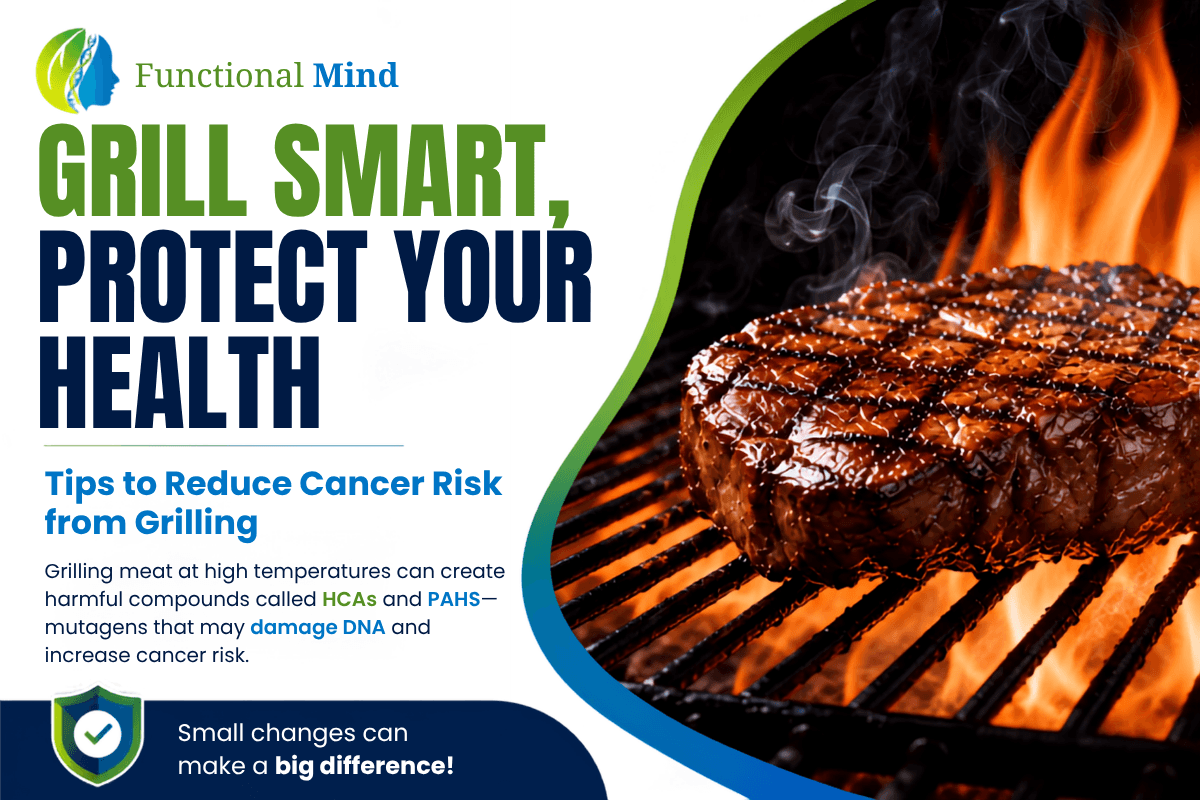
Why High-Temperature Grilling Can Increase Cancer Risk
When meat is grilled over high heat or open flames, two compounds can form:
- Heterocyclic Amines (HCAs) – Produced when amino acids and natural sugars in meat react to high temperatures.
- Polycyclic Aromatic Hydrocarbons (PAHs) – Created when fat drips onto hot coals or flames, producing smoke that coats the meat.
Both HCAs and PAHs are considered mutagens, meaning they can damage DNA and may contribute to an increased risk of cancer over time.
The good news is that you don’t have to stop grilling. Instead, use healthier cooking practices that reduce the formation of these compounds.
Healthy Grilling Tips to Reduce HCAs and PAHs
Healthy Grilling Tips #1: Choose Leaner Cuts of Meat
Selecting lean cuts of beef, pork, or poultry reduces fat drippings, resulting in less smoke and fewer PAHs.
For poultry, remove the skin before cooking to further reduce HCA formation.
Healthy Grilling Tips #2: Marinate Before Grilling
One of the easiest healthy grilling tips is to marinate your meat before it reaches the grill.
Research suggests that marinades containing acidic ingredients such as:
- Lemon juice
- Lime juice
- Vinegar
can significantly reduce HCA formation.
If you’re using sweet barbecue sauces, wait until the meat is fully cooked before brushing them on, as sugars can burn quickly and increase charring.
Healthy Grilling Tips #3: Season with Herbs and Spices
Adding herbs and spices not only enhances flavor but may also help reduce harmful compounds during grilling.
Try using:
- Rosemary
- Garlic
- Turmeric
- Ginger
- Thyme
- Mint
- Onion
- Red chili pepper
These ingredients work well in marinades, dry rubs, or mixed into ground meats.
Healthy Grilling Tips #4: Avoid Overcooking or Charring
The longer the meat stays over intense heat, the more HCAs and PAHs can develop.
Instead:
- Cook over medium heat when possible.
- Turn meat frequently.
- Cut larger pieces into smaller portions.
- Choose quicker-cooking proteins like shrimp or fish.
- Trim away any blackened or charred portions before eating.
Healthy Grilling Tips #5: Grill More Fruits and Vegetables
Healthy grilling isn’t just about meat.
Fruits and vegetables contain antioxidants that may help protect cells from oxidative stress and DNA damage.
Great options include:
- Zucchini
- Bell peppers
- Sweet potatoes
- Pineapple
- Apples
- Peaches
- Watermelon
They also add color, flavor, fiber, and nutrients to your meal.
A Functional Medicine Approach to Healthy Eating
At Functional Mind, we know that long-term health isn’t determined by a single meal—it’s built through consistent lifestyle choices.
Small habits, such as choosing healthier grilling methods, reducing processed foods, improving nutrition, and supporting metabolic health, can have lasting benefits.
If you’d like personalized guidance on nutrition, inflammation, metabolic health, or other root causes affecting your well-being, our team is here to help.
👉 Schedule your FREE Discovery Call with one of our providers:
https://fxnmind.com/our-providers/
Grilling can absolutely be part of a healthy lifestyle. By choosing lean meats, marinating before cooking, using antioxidant-rich herbs, avoiding excessive charring, and adding more fruits and vegetables to your grill, you can enjoy delicious meals while reducing exposure to potentially harmful compounds.
Small changes today can support better health for years to come.
Source: This article is based on evidence-informed guidance from the Institute for Functional Medicine (IFM), including information from their article, “Food Preparation and Toxicant Exposure.” We are grateful to IFM for advancing education on nutrition, lifestyle medicine, and functional medicine to support better health outcomes. https://www.ifm.org/articles/food-prep-and-toxicant-exposure