
Food Sensitivity: Symptoms, Causes, and What to Know
Food Sensitivity: Why the Same Food Can Affect People Differently
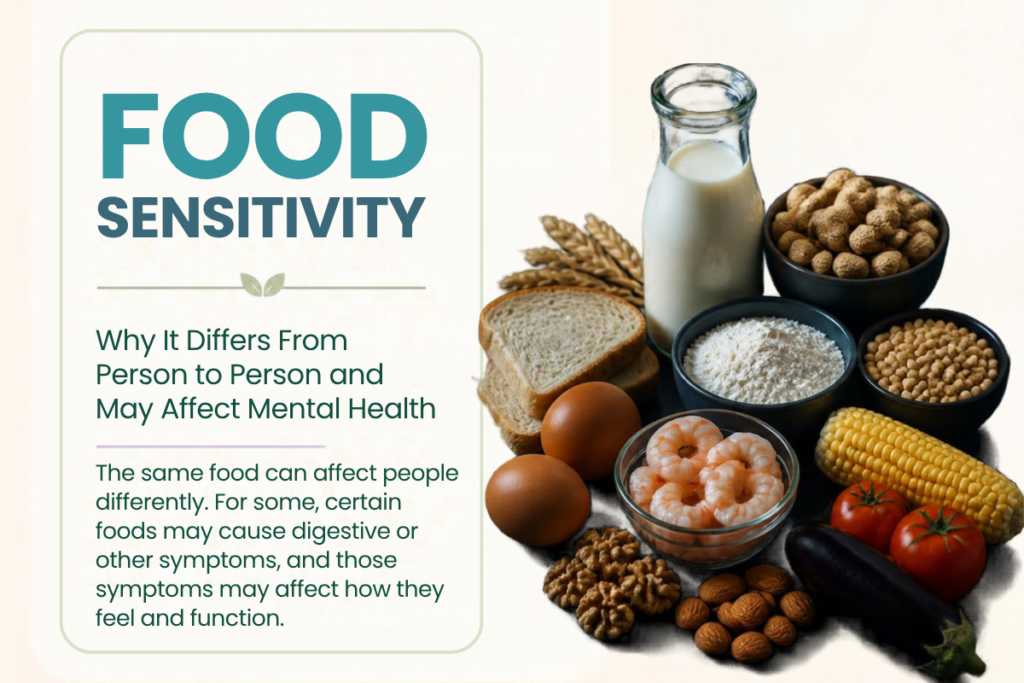
Have you ever noticed that a food you tolerate well seems to bother someone else? Or that something you’ve eaten for years suddenly doesn’t agree with you?
Food sensitivity can be confusing because there isn’t one simple explanation for every symptom someone experiences after eating.
Before you start eliminating foods from your diet, it’s important to understand the difference between a food allergy, a food intolerance, and what people commonly call a food sensitivity.
What Is Food Sensitivity?
Food sensitivity is a broad term people often use when they notice symptoms they believe are connected to certain foods.
Those symptoms can be very different from one person to another. Someone may notice bloating or abdominal discomfort. Someone else may report headaches, fatigue, or difficulty concentrating.
But here’s something I want you to keep in mind:
Having a symptom after eating a particular food doesn’t automatically mean that food caused the symptom.
There can be many reasons why you don’t feel well after eating. That’s why looking at the pattern matters.
There also isn’t one test that can identify every possible food sensitivity.
Some commercially available food sensitivity tests, including food-specific IgG panels, are marketed as a way to identify foods that may be causing symptoms. However, major allergy organizations don’t recommend these tests for diagnosing food allergy or food intolerance/sensitivity.
The better place to start is with your symptoms, your health history, and what you consistently notice.
Food Allergy vs. Food Sensitivity vs. Food Intolerance
These terms are often used interchangeably, but they don’t mean the same thing.
A food allergy involves an immune response to a food. Some allergic reactions can happen quickly after eating and can become severe, including anaphylaxis.
A food sensitivity is a much broader term that people may use when they notice symptoms they associate with certain foods.
A food intolerance generally refers to difficulty processing or digesting a food. Lactose intolerance is one common example.
The distinction matters because the evaluation and management can be very different.
If you think you may have a food allergy, don’t try to diagnose or challenge the food on your own. A suspected food allergy deserves appropriate medical evaluation.
What Are Common Food Sensitivity Symptoms?
People may associate a variety of symptoms with certain foods, including:
- Bloating
- Gas
- Abdominal discomfort
- Diarrhea or changes in bowel habits
- Headaches
- Fatigue
- Difficulty concentrating or “brain fog”
But these symptoms aren’t specific to food sensitivity.
For example, fatigue can have many causes. So can headaches, digestive symptoms, and difficulty concentrating.
That’s why one isolated reaction doesn’t necessarily tell you what’s happening.
If you repeatedly notice the same symptoms after eating a particular food or group of foods, that’s different. It gives you a pattern worth paying attention to and discussing with your healthcare professional.
Why Can the Same Food Affect People Differently?
This is where I encourage people to look beyond the food itself.
What you experience after eating can be influenced by more than what’s on your plate. Your digestion, health history, medications, stress, and other factors may all be relevant.
Two people can eat the same meal and have very different experiences.
That doesn’t necessarily mean one person is “healthy” and the other isn’t. It means we need to understand the individual.
This is one reason I don’t recommend labeling foods as simply “good” or “bad” based on someone else’s experience.
Your body and your circumstances are your own.
Can Food Sensitivity Affect How You Feel?
Food and digestion can affect your day-to-day experience.
If eating a particular food repeatedly leaves you bloated, uncomfortable, tired, or unable to concentrate, those symptoms can affect how you function and how you feel.
At the same time, it’s important not to assume that food sensitivity is the explanation for every mental or physical symptom.
Fatigue, brain fog, changes in mood, headaches, and digestive problems can have many possible causes.
This is where the gut-brain connection becomes an important part of the conversation.
Your digestive system and brain communicate through multiple pathways. If you’d like to learn more about this relationship, read our article on the Gut-Brain Connection.
The goal isn’t to blame every symptom on your food.
The goal is to understand the pattern and ask better questions.
How Can You Identify Possible Food Triggers?
Start by paying attention.
A simple food and symptom diary can help you and your healthcare professional look for patterns.
You can record:
- What you ate
- Approximately how much you ate
- When you ate it
- When symptoms appeared
- What symptoms you noticed
- How long the symptoms lasted
- Other factors that may be relevant, such as medications, illness, stress, or changes in your routine
You may begin to notice that certain symptoms occur repeatedly under similar circumstances.
But remember, a pattern isn’t automatically proof that one food caused the symptom.
That’s why the bigger picture matters.
If you’re dealing with persistent digestive symptoms, you can also learn more about other possible causes in our article, Is It IBS or Something More?.
Should You Eliminate Foods If You Think You Have a Food Sensitivity?
This is where I encourage people to be careful.
It’s easy to find a list online telling you that you should avoid dairy, gluten, eggs, sugar, nightshades, or a long list of other foods.
But eliminating food after food without understanding why can make eating unnecessarily complicated.
It can also make it harder to maintain a balanced diet.
Instead of immediately removing multiple foods, start by understanding what you’re experiencing.
“What did you eat?”
“How much did you eat?”
“What happened afterward?”
“Does the same thing happen repeatedly?”
“What else was happening at the time?”
Depending on your symptoms and health history, your healthcare professional may recommend an appropriate evaluation or a structured dietary approach.
The goal isn’t to become afraid of food.
It’s to understand your body’s response.
When Should You Talk to a Healthcare Professional?
Consider talking with a healthcare professional if:
- Your symptoms are persistent or getting worse.
- You repeatedly notice symptoms after eating certain foods.
- You’re eliminating more and more foods from your diet.
- Your symptoms are interfering with your daily life.
- You’re concerned that you may have a food allergy.
- You aren’t sure whether your symptoms are related to food.
If you experience symptoms of a severe allergic reaction, such as difficulty breathing, significant swelling, or other signs of anaphylaxis, seek emergency medical care.
A suspected food allergy should be evaluated appropriately rather than managed through trial and error.
Looking at the Whole Picture
When someone tells me, “I think food is making me feel worse,” I don’t want to immediately hand them a list of foods to eliminate.
I want to understand the pattern.
“What are you eating?”
“How much are you eating?”
“What happens afterward?”
“How often does it happen?”
“What else is going on with your health?”
Food can be an important piece of the picture, but it’s only one piece.
If you’ve been trying to understand symptoms that seem connected to food, you don’t have to figure everything out by yourself.
Ready to Take the Next Step?
If you’re noticing a pattern between what you eat and how you feel, a conversation with Dr. Achina Stein can help you look at the bigger picture.
Call Functional Mind: 401-270-4541
Book a free discovery call with Dr. Achina Stein:
https://fxnmind.com/free-consultation-with-achina/
Sometimes the first step isn’t eliminating another food.
It’s taking a closer look at what’s really happening.
Frequently Asked Questions
What is food sensitivity?
Food sensitivity is a broad term people often use when they notice symptoms they believe are related to certain foods. The symptoms and underlying causes can vary from person to person.
What is the difference between food allergy and food sensitivity?
A food allergy involves an immune response to a food and can sometimes cause a severe reaction. Food sensitivity is a broader term that people may use for symptoms they associate with certain foods.
What are common food sensitivity symptoms?
People may report symptoms such as bloating, gas, abdominal discomfort, changes in bowel habits, headaches, fatigue, or difficulty concentrating after eating certain foods. These symptoms can also have many other causes.
Can food sensitivity affect how you feel?
Food-related symptoms such as digestive discomfort, fatigue, or difficulty concentrating can affect your daily comfort and quality of life. However, these symptoms have many possible causes and shouldn’t automatically be attributed to food sensitivity.
How can I identify foods that may be causing symptoms?
Keeping a food and symptom diary can help you and your healthcare professional look for patterns. Record what you eat, how much you eat, when symptoms appear, what symptoms you notice, and other relevant factors such as medications, illness, or stress.
Should I eliminate foods if I think I have a food sensitivity?
It’s best not to eliminate large numbers of foods without understanding why. Unnecessary dietary restriction can make eating more complicated and may make it harder to maintain a balanced diet. Discuss persistent or concerning symptoms with a qualified healthcare professional.