
5 Benefits of Brisk Walking to Your Mental Health
When you’re feeling stressed, overwhelmed, or mentally drained, you might think you need to make a big change to feel better.
Sometimes, a much simpler place to start is with a walk.
Brisk walking is an easy way to add more movement to your day, and it can do more than support your physical health. Regular physical activity can also support your mood, help manage stress and anxiety, improve sleep, and support overall brain health.
The best part? You don’t need a gym membership or an intense workout to get started. A pair of comfortable shoes and a little time may be all you need.
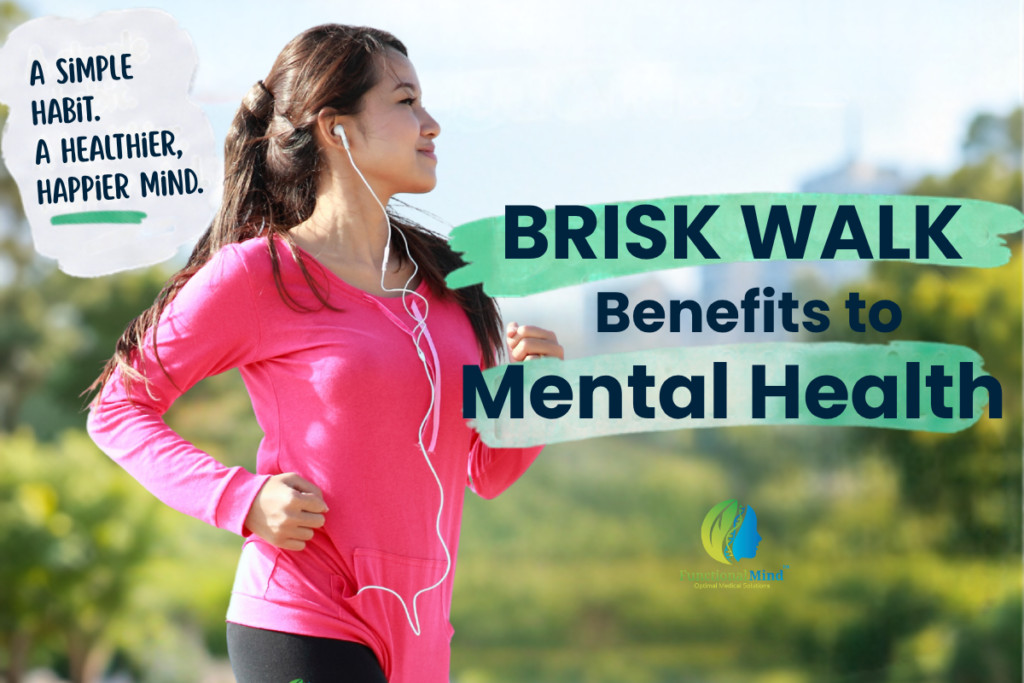
What Is a Brisk Walk?
A brisk walk is faster than a casual stroll, but it shouldn’t leave you completely out of breath.
Your heart rate and breathing should increase, but you should still be able to have a conversation. This is often called the talk test.
The right pace will look different for everyone. If you’re new to exercise, a slower pace may be enough to get your body moving. As your fitness improves, you can gradually increase your pace or walking time.
1. Brisk Walking May Help Improve Your Mood
Have you ever gone for a walk when you were having a difficult day and come back feeling a little better?
There’s a reason movement can sometimes change how we feel.
Physical activity affects several systems involved in mood and stress regulation. Research looking specifically at walking has found that regular walking may help reduce symptoms of depression.
That doesn’t mean going for one walk will make depression disappear. It also doesn’t mean walking replaces therapy, medication, or other appropriate treatment.
Instead, think of walking as one simple habit that can support your overall mental health.
Why can a walk feel like a reset?
When you’ve been sitting at your desk, worrying about something, or staring at a screen for hours, getting up and changing your surroundings can be helpful.
A walk gives you an opportunity to:
- Move your body
- Step away from your screen
- Get some fresh air
- Spend time outdoors
- Take a break from whatever has been occupying your mind
Sometimes, you simply need a few minutes to step away before you can come back with a clearer perspective.
2. Brisk Walking May Help Reduce Stress and Anxiety
Stress isn’t just something you feel emotionally. Your body responds to it, too.
You may notice tense muscles, faster breathing, a racing heart, difficulty concentrating, or trouble sleeping when you’re under a lot of stress.
Regular physical activity can support the body’s ability to manage stress. Research on walking has also found that walking may help reduce anxiety symptoms.
Of course, a walk won’t solve everything that’s causing you stress or anxiety. But it can give you a healthy way to pause, move, and create some space between yourself and the things that are overwhelming you.
Try paying attention while you walk
You don’t have to turn your walk into a formal meditation.
Simply notice what’s around you.
Pay attention to:
- Your breathing
- Your footsteps
- The sounds around you
- The feeling of the air
- The movement of your body
- What you see along the way
For a few minutes, let yourself focus on where you are instead of everything you need to do.
3. Brisk Walking Can Support Focus and Brain Health
Your brain benefits from movement, too.
Regular physical activity is associated with cognitive health and can be a helpful way to break up long periods of sitting or mentally demanding work.
If you’ve been staring at your computer for hours and can’t seem to concentrate anymore, stepping outside for a short walk may be just the break you need.
You could try taking a walk:
- Before starting a challenging task
- During your lunch break
- After several hours of computer work
- When you feel mentally stuck
- When you need a break from your phone or computer
You don’t have to walk for an hour. Even a short break can help you step away from your usual environment and return to your task feeling refreshed.
4. Brisk Walking May Support Better Sleep
Sleep and mental health are closely connected.
When you don’t sleep well, stress can feel harder to manage. You may also find it more difficult to concentrate, regulate your emotions, or handle everyday challenges.
Regular physical activity can support healthier sleep, and research has found improvements in sleep among people who participate in exercise programs.
Walking is a practical option because you can adjust it to your own fitness level.
Make movement part of your day
Try finding a time that naturally fits into your routine:
- Take a walk in the morning.
- Walk during your lunch break.
- Take an evening walk after dinner.
- Walk while listening to your favorite podcast.
- Take short walking breaks during your workday.
If you’re not currently active, you don’t have to start with a long walk. Start where you are and build from there.
5. Regular Walking Can Help Build Emotional Resilience
Being emotionally resilient doesn’t mean that you never feel stressed, anxious, frustrated, or sad.
It means having healthy ways to move through those experiences.
Regular physical activity can be one part of that process. Exercise research has found that physical activity can help reduce symptoms of depression and anxiety.
Walking can also give your day a little structure.
You decide to walk.
You put on your shoes.
You step outside.
You move.
It sounds simple—and it is. But small, consistent habits can become an important part of taking care of yourself.
How Long Should You Walk for Mental Health Benefits?
There’s no magic number of minutes that everyone needs to walk.
For general health, adults are encouraged to work toward at least 150 minutes of moderate-intensity physical activity each week. Brisk walking is one way to reach that goal.
That could mean about 30 minutes a day, five days a week.
But if 30 minutes feels like too much right now, don’t let that discourage you.
Start with 5, 10, or 15 minutes. The important thing is to find a level of activity you can realistically maintain and gradually build from there.
How Do You Know If You’re Walking Briskly Enough?
Your walk should feel more active than a leisurely stroll.
You may notice that:
- You’re breathing a little faster.
- Your heart rate has increased.
- Your body feels warmer.
- You may start to sweat.
- You can still talk, but singing would be difficult.
Your ideal pace depends on your age, fitness level, and overall health.
How to Make Brisk Walking a Habit
Knowing that walking is good for you is one thing.
Actually making it part of your routine is another.
Here are a few simple ways to make it easier.
Start Small
If you haven’t been exercising regularly, don’t feel like you have to do a long walk right away.
Start with something manageable.
Find a Time That Works for You
Morning, lunch, after work, or after dinner—there’s no single “right” time.
Choose a time you’re most likely to stick with.
Make It Something You Enjoy
Listen to music, listen to a podcast, bring your dog, or simply enjoy some quiet time.
Put It on Your Calendar
If you wait until you have free time, it may never happen.
Treat your walk like any other appointment.
Don’t Aim for Perfect
You will miss a day sometimes.
That’s okay.
What matters more is getting back to it instead of giving up altogether.
Brisk Walking Is Not a Replacement for Mental Health Care
Walking can be a helpful part of a healthy lifestyle, but it isn’t a cure for depression, anxiety, or other mental health conditions.
If you’re dealing with persistent sadness, severe anxiety, significant changes in sleep or appetite, difficulty functioning, or thoughts of harming yourself, it’s important to reach out to a qualified healthcare professional.
If you’re already receiving mental health care, walking can be one part of a broader approach to your well-being.
A Simple Walk Can Be a Meaningful Step
Taking care of your mental health doesn’t always require a complicated routine.
Sometimes, it’s about finding small things you can do consistently.
A brisk walk can give you time to move, breathe, get outside, and take a break from the demands of the day. Research suggests that walking may help with symptoms of depression and anxiety, while regular physical activity can also support sleep, cognitive health, and overall well-being.
So the next time you feel stressed or mentally exhausted, consider stepping outside for a walk.
You don’t have to go far.
You just have to take the first step.
Medical Disclaimer: This article is for educational purposes only and is not intended to replace individualized medical advice, diagnosis, or treatment.
Frequently Asked Questions
Can brisk walking help with anxiety?
Walking may help reduce anxiety symptoms. Research examining walking interventions has found that walking can be associated with improvements in anxiety symptoms compared with inactive controls.
Can walking help with depression?
Walking may help reduce symptoms of depression. However, walking should not be considered a replacement for professional mental health treatment when treatment is needed.
How long should I walk for mental health?
There isn’t one amount of time that works for everyone. For general health, adults are encouraged to work toward at least 150 minutes of moderate-intensity physical activity each week, which can include brisk walking.
How do I know if I'm walking briskly enough?
Try the talk test. During a moderate-intensity walk, you should generally be able to talk, but you would have difficulty singing comfortably.
Can walking improve sleep?
Regular physical activity can support healthy sleep, and research has found improvements in sleep among people participating in exercise programs.
Is walking enough to improve mental health?
Walking can be a helpful part of a healthy lifestyle, but mental health is influenced by many factors. If you’re experiencing ongoing or severe symptoms, walking should complement—not replace—appropriate professional care.