Exercise for Hormone Balance: Why Movement Is Medicine
If you’ve been struggling with fatigue, brain fog, poor sleep, or low energy, exercise for hormone balance may be one of the most effective—and most overlooked—tools to help restore your health. In functional medicine, movement isn’t simply about losing weight or burning calories. It is a biological signal that influences your hormones, metabolism, brain function, immune system, and overall well-being.
Many people believe they need intense workouts to see results. In reality, the right type of movement, performed consistently and matched to your body’s current needs, often creates the biggest improvements.
Sometimes the Best Medicine Isn’t Found in a Bottle
A patient came into our clinic feeling exhausted. She experienced fatigue, brain fog, elevated inflammatory markers, and a cortisol pattern suggesting her body was under constant stress.
We completed a comprehensive evaluation. We addressed nutrition, improved sleep habits, and looked at the whole picture. Every intervention played an important role.
Yet the greatest improvement came from something surprisingly simple.
She started moving consistently.
Not hours in the gym.
Not exhausting herself with high-intensity workouts.
Instead, we created a structured, progressive movement plan that matched where her body was physiologically.
That simple change transformed her energy, resilience, and overall health.
This is one of the core principles of functional medicine: the right intervention at the right time can create profound results.
Exercise Is a Signal to Your Hormones
One of the biggest misconceptions about exercise is that it’s only useful for burning calories or losing weight.
Your body doesn’t see movement that way.
Every workout sends powerful biological signals throughout your body.
Movement communicates with your:
- Nervous system
- Hormones
- Gut microbiome
- Brain
- Immune system
- Metabolism
The type, intensity, and consistency of your movement influence how these systems function.
That’s why exercise for hormone balance isn’t about exercising harder—it’s about exercising smarter.
Resistance Training Supports Metabolic Health
Strength training does much more than build muscle.
Muscle is your body’s largest metabolic organ.
Increasing lean muscle mass helps:
- Improve insulin sensitivity
- Support healthy blood sugar regulation
- Increase metabolic flexibility
- Protect against age-related muscle loss
- Lower the risk of chronic disease
For many people dealing with fatigue, hormone imbalance, or metabolic dysfunction, resistance training becomes one of the most effective long-term investments in health.
Why Zone 2 Cardio Matters
Not every workout needs to leave you exhausted.
Zone 2 cardio—where you can comfortably hold a conversation while exercising—helps train your mitochondria to produce energy more efficiently.
Examples include:
- Brisk walking
- Cycling
- Swimming
- Easy jogging
- Hiking
Improving mitochondrial function supports:
- Better energy
- Improved endurance
- Faster recovery
- Better metabolic health
Consistent moderate-intensity exercise often provides greater long-term benefits than constantly pushing your body to its limits.
Walking After Meals Can Improve Blood Sugar
One of the easiest habits to implement is walking for 20–25 minutes after meals.
This simple habit helps muscles use glucose more efficiently, supports healthy blood sugar regulation, and can improve insulin sensitivity over time.
Sometimes the smallest daily habits produce the greatest long-term health benefits.
More Exercise Isn’t Always Better
In functional medicine, we commonly see two extremes.
Some people perform intense workouts every day without enough recovery.
Others spend most of the day sitting and rarely move.
Neither extreme supports optimal hormone health.
Overtraining can increase cortisol, interfere with sleep, slow recovery, and contribute to the very hormone imbalances you’re trying to correct.
The goal isn’t simply to exercise more.
The goal is to exercise appropriately for your body’s current needs.
Why Personalized Exercise Plans Work Better
No two people have the same physiology.
Your ideal movement prescription depends on factors such as:
- Current stress load
- Sleep quality
- Hormone balance
- Nutritional status
- Metabolic health
- Recovery capacity
- Current fitness level
Cookie-cutter workout plans often ignore these important variables.
A personalized exercise program allows your body to adapt safely while supporting long-term health.
Movement Supports Long-Term Brain and Body Health
Research consistently shows that physically active individuals have lower risks of:
- Depression
- Dementia
- Cardiovascular disease
- Type 2 diabetes
- Insulin resistance
- Premature mortality
Movement remains one of the most evidence-supported lifestyle interventions available.
When combined with proper nutrition, quality sleep, stress management, and personalized functional medicine care, exercise becomes a powerful tool for improving both physical and mental health.
When Should You Seek Professional Guidance?
If you’ve been experiencing:
- Fatigue that doesn’t improve with sleep
- Brain fog
- Poor exercise recovery
- Difficulty losing weight
- Low motivation
- Feeling wired but exhausted
exercise may be an important piece of the puzzle—but it may not be the whole answer.
Functional medicine looks beyond symptoms to identify the underlying causes affecting your health.
An individualized assessment can help determine the right movement strategy based on your unique biology.
If you’re ready to stop guessing and start building a personalized plan that works with your body—not against it—schedule your FREE Discovery Call with Vincent Petronelli.
👉 Book your FREE Discovery Call:
https://fxnmind.com/book-your-free-discover-call-with-vincent-petronelli/
Together, we’ll explore what’s contributing to your symptoms and develop a plan designed specifically for your health goals.
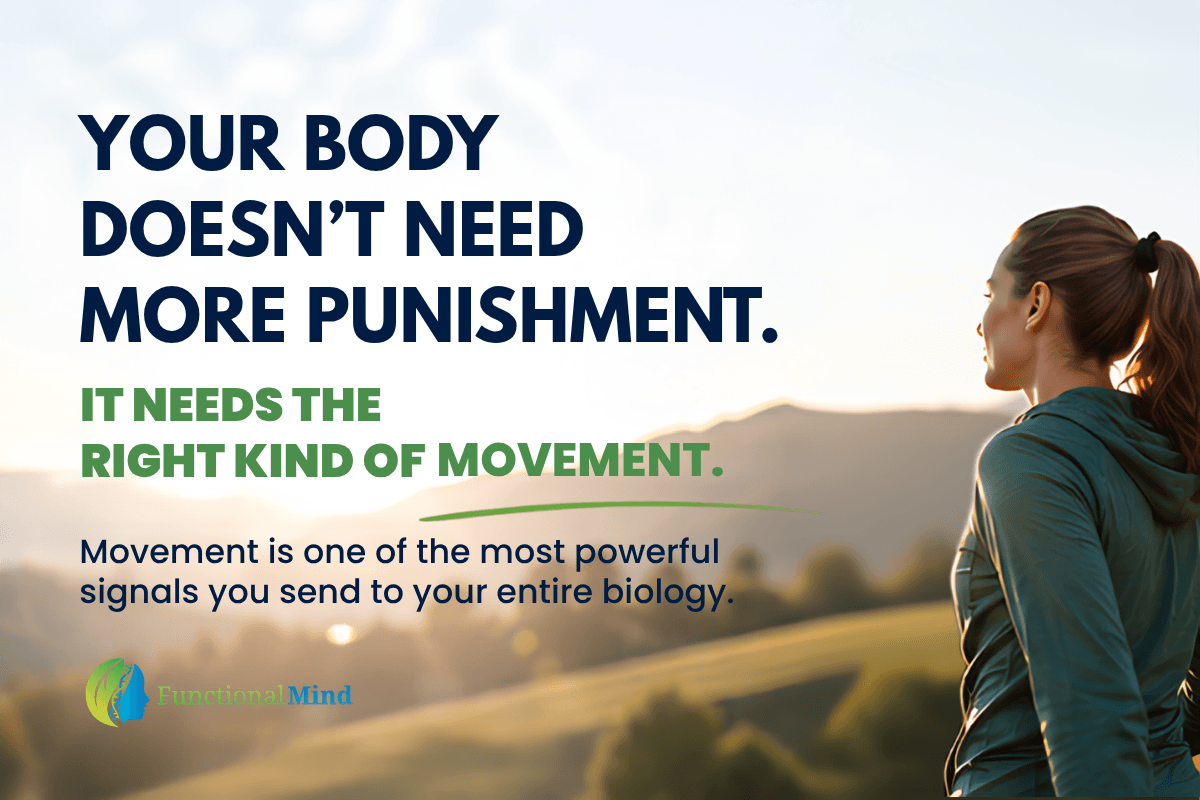
Exercise isn’t punishment. It isn’t simply about burning calories or chasing a number on the scale. It’s one of the most powerful biological signals you can give your body. The right movement supports hormone balance, brain health, metabolic health, energy production, and healthy aging. Rather than asking, “How hard should I work out?”, ask yourself: “What kind of movement does my body need today?” That simple shift in perspective could be the first step toward feeling healthier, stronger, and more energized.
Resources
The information in this article is supported by evidence-based guidelines and recommendations from leading health organizations. If you’d like to learn more about the role of exercise in hormone balance, metabolic health, and disease prevention, explore these trusted resources:
- American College of Sports Medicine (ACSM) – Exercise recommendations for improving fitness, strength, and overall health.
- Physical Activity Guidelines for Americans – Official U.S. Department of Health & Human Services recommendations for physical activity across all age groups.
- Centers for Disease Control and Prevention (CDC): Physical Activity – Learn how regular physical activity supports long-term health and disease prevention.
- National Institute on Aging (NIA): Exercise and Physical Activity – Practical guidance on how exercise supports healthy aging, mobility, and brain health.
- American Heart Association: Fitness & Physical Activity – Expert recommendations for improving heart health through regular movement.
Frequently Asked Questions
Can exercise help balance hormones?
Yes. Regular, personalized exercise can support hormone balance by improving insulin sensitivity, lowering chronic stress, enhancing sleep quality, and promoting healthy metabolic function.
What is the best exercise for hormone balance?
A combination of resistance training, Zone 2 cardio, walking, and adequate recovery is often recommended. The ideal program depends on your age, current health, stress levels, and fitness goals.
Can walking improve hormone health?
Yes. Walking, especially for 20–25 minutes after meals, can improve blood sugar regulation, reduce stress, and support overall metabolic and hormone health.
Can too much exercise affect hormones?
Yes. Excessive exercise without adequate recovery can increase cortisol levels, disrupt sleep, and negatively affect hormone balance. Recovery is an essential part of every exercise program.
When should I seek a personalized exercise plan?
If you’re experiencing fatigue, brain fog, poor recovery, hormone imbalance, or persistent health concerns, a personalized functional medicine assessment can help identify the movement strategy that’s right for you.