
Prevent Mold: 5 Proven Ways to Protect Your Home & Health
Prevent mold before it becomes a health problem. Have you changed your diet, taken supplements, detoxed, or even moved homes—yet still struggle with brain fog, fatigue, headaches, sinus congestion, anxiety, or other unexplained symptoms?
For some people, the missing piece isn’t another medication or supplement—it’s their environment.
Growing research suggests that living in a water-damaged building may contribute to chronic health problems in susceptible individuals, including respiratory symptoms, allergies, chronic fatigue, cognitive dysfunction, worsening asthma, and inflammatory responses. While mold exposure affects people differently, it’s an often-overlooked root cause that deserves attention. According to the Centers for Disease Control and Prevention (CDC), exposure to damp indoor environments and mold may contribute to a variety of health problems, particularly in sensitive individuals.
The encouraging news is that most mold problems are preventable. Because mold cannot grow without moisture, I learned from John Bohde, the founder of MoldPros, that controlling moisture is the key to protecting both your home and your health.
The key isn’t eliminating every mold spore—because that’s impossible. Instead, it’s controlling moisture. Mold cannot grow without water, and the U.S. Environmental Protection Agency (EPA) identifies moisture control as the most effective strategy for preventing mold growth.
Whether you’re trying to create a healthier home or investigating possible environmental contributors to chronic symptoms, these five strategies can help you prevent mold before it becomes a bigger problem.
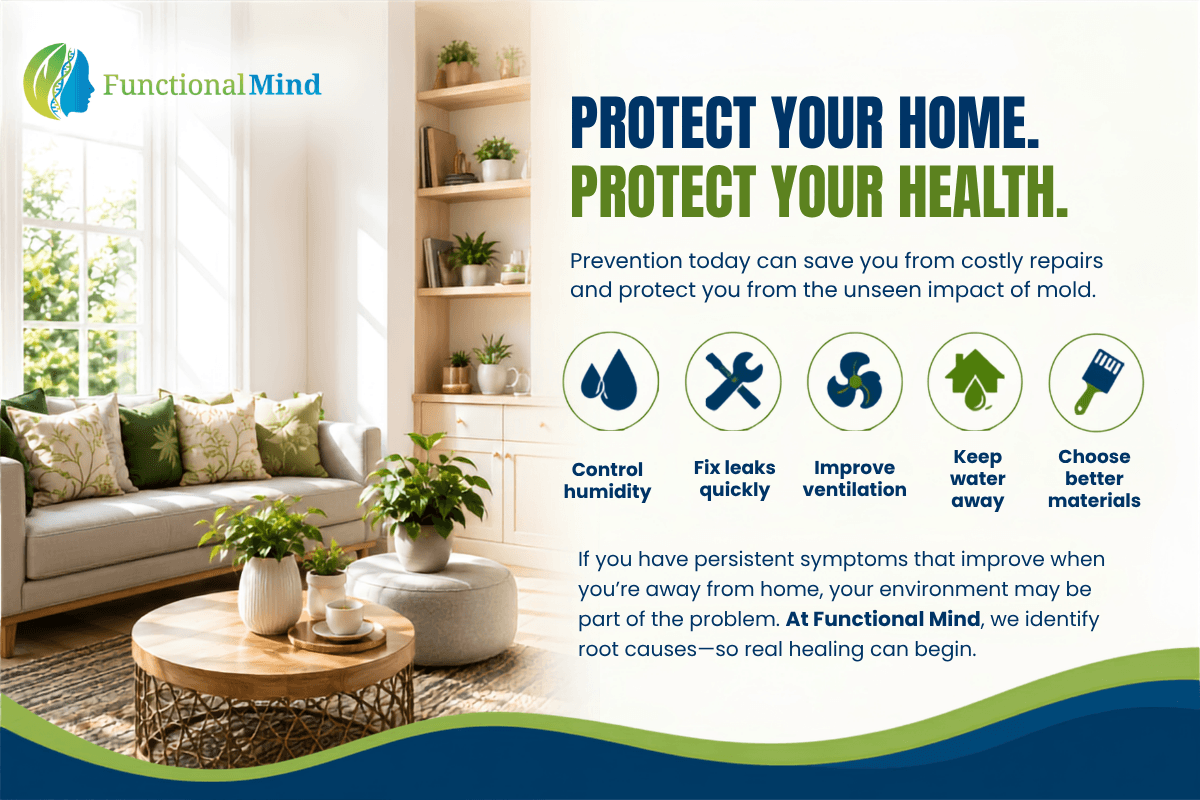
Why Preventing Mold Matters
Mold spores naturally exist both indoors and outdoors. They only become problematic when excess moisture allows them to settle and multiply on damp surfaces.
The CDC and EPA both recommend controlling moisture as the primary way to prevent mold growth indoors.
If you’re experiencing:
- Brain fog
- Chronic fatigue
- Frequent headaches
- Sinus congestion
- Seasonal allergies
- Asthma flare-ups
- Respiratory symptoms
It’s worth considering whether your indoor environment could be contributing to how you feel.
1. Control Indoor Humidity—Your Best Defense Against Mold
If you only make one change, make it this.
The EPA recommends keeping indoor relative humidity between 30% and 50%. Once humidity consistently rises above this range, mold can begin growing on damp surfaces within 24 to 48 hours.
Ways to keep humidity under control:
- Use a hygrometer to monitor humidity throughout your home.
- Pay special attention to basements, crawl spaces, bathrooms, and laundry rooms.
- Use a quality dehumidifier if humidity regularly exceeds 50%.
- Ensure your air conditioner is properly sized to remove moisture efficiently.
- Install a smart thermostat with humidity monitoring.
- Watch for condensation on windows—a common sign that indoor humidity is too high.
2. Fix Water Leaks Immediately
Water damage is one of the leading causes of hidden mold growth.
Leaks beneath sinks, around toilets, behind appliances, near windows, or inside your attic may appear minor, but continuous moisture creates ideal conditions for mold.
Inspect your home regularly for:
- Water stains
- Bubbling or peeling paint
- Ceiling discoloration
- Warped flooring
- Musty odors
- Unexpected increases in your water bill
If drywall, insulation, or carpeting remains wet for more than 48 hours, hidden mold may already be developing. The EPA’s mold prevention guide recommends drying wet materials as quickly as possible to reduce the risk of mold growth.
3. Improve Ventilation Throughout Your Home
Everyday activities like showering, cooking, and doing laundry release significant amounts of moisture into your home.
Without proper ventilation, that moisture becomes trapped indoors.
Reduce moisture by:
- Running bathroom exhaust fans for 20–30 minutes after showering.
- Using your kitchen range hood while cooking.
- Venting dryers outdoors.
- Replacing HVAC filters regularly.
- Keeping return vents unobstructed.
- Improving airflow in attics, crawl spaces, and basements.
The CDC recommends reducing indoor moisture to help prevent mold growth and improve indoor air quality.
4. Keep Water Away From Your Foundation
Many mold problems actually begin outside the home.
Clogged gutters, short downspouts, poor grading, and standing water allow moisture to collect around your home’s foundation. Over time, concrete absorbs moisture, which can seep into basements and crawl spaces.
Reduce your risk by:
- Cleaning gutters at least twice a year.
- Extending downspouts 5–6 feet away from your home.
- Ensuring the ground slopes away from your foundation.
- Addressing standing water promptly.
- Installing French drains or drainage improvements if needed.
- Keeping window wells clean and draining properly.
The EPA Mold Resources Center offers additional information about preventing moisture intrusion and mold growth.
5. Choose Mold-Resistant Materials During Renovations
If you’re remodeling or building a new home, choosing the right materials can help reduce future mold problems.
Consider using:
- Mold-resistant drywall
- Paperless drywall
- Mold-resistant paint
- Ceramic tile
- Luxury vinyl plank flooring
- Sealed concrete
Store belongings in plastic containers instead of cardboard boxes, which easily absorb moisture.
If you’ve experienced water damage, never close walls until every building material has completely dried. Hidden moisture behind drywall is one of the most common reasons mold returns after repairs.
The National Institute of Environmental Health Sciences (NIEHS) also provides valuable information on mold exposure and moisture management.
Protect Your Home. Protect Your Health.
Many homeowners don’t think about mold until they discover visible growth—or begin experiencing unexplained symptoms. Unfortunately, remediation can cost thousands of dollars.
Fortunately, prevention is far more affordable.
Keeping humidity under control, fixing leaks quickly, improving ventilation, directing water away from your home, and choosing mold-resistant materials all work together to reduce mold growth and create a healthier indoor environment.
If your symptoms improve when you’re away from home, your indoor environment may be worth investigating.
At Functional Mind, we believe healing begins by identifying the root cause, not simply treating symptoms. Sometimes, one of the most important places to investigate isn’t your body first—it’s your home.
Schedule Your Free Discovery Call
If you’re experiencing persistent brain fog, chronic fatigue, headaches, allergies, sinus congestion, respiratory symptoms, or other unexplained health concerns, our team can help you explore potential root causes.
? Schedule your FREE Discovery Call with our providers and learn how a functional medicine approach can help uncover factors that may be affecting your health.
Frequently Asked Questions
What is the best way to prevent mold in your home?
The most effective way to prevent mold is to control moisture. Keep indoor humidity between 30% and 50%, repair leaks promptly, improve ventilation, and prevent water from accumulating around your home’s foundation.
How quickly can mold grow after water damage?
According to the U.S. Environmental Protection Agency (EPA), mold can begin growing within 24 to 48 hours after materials become wet.
Can mold exposure affect your health?
Yes. The Centers for Disease Control and Prevention (CDC) notes that mold exposure may contribute to respiratory symptoms, allergies, asthma flare-ups, and other health concerns in susceptible individuals.
Should I test my home for mold if I have chronic symptoms?
If your symptoms improve when you’re away from home or you suspect hidden water damage, evaluating your indoor environment may be worthwhile. Discuss your concerns with a qualified healthcare provider and consider professional mold inspection if appropriate.
Additional Resources
For more information on mold prevention and indoor environmental health, explore these trusted resources: